Description
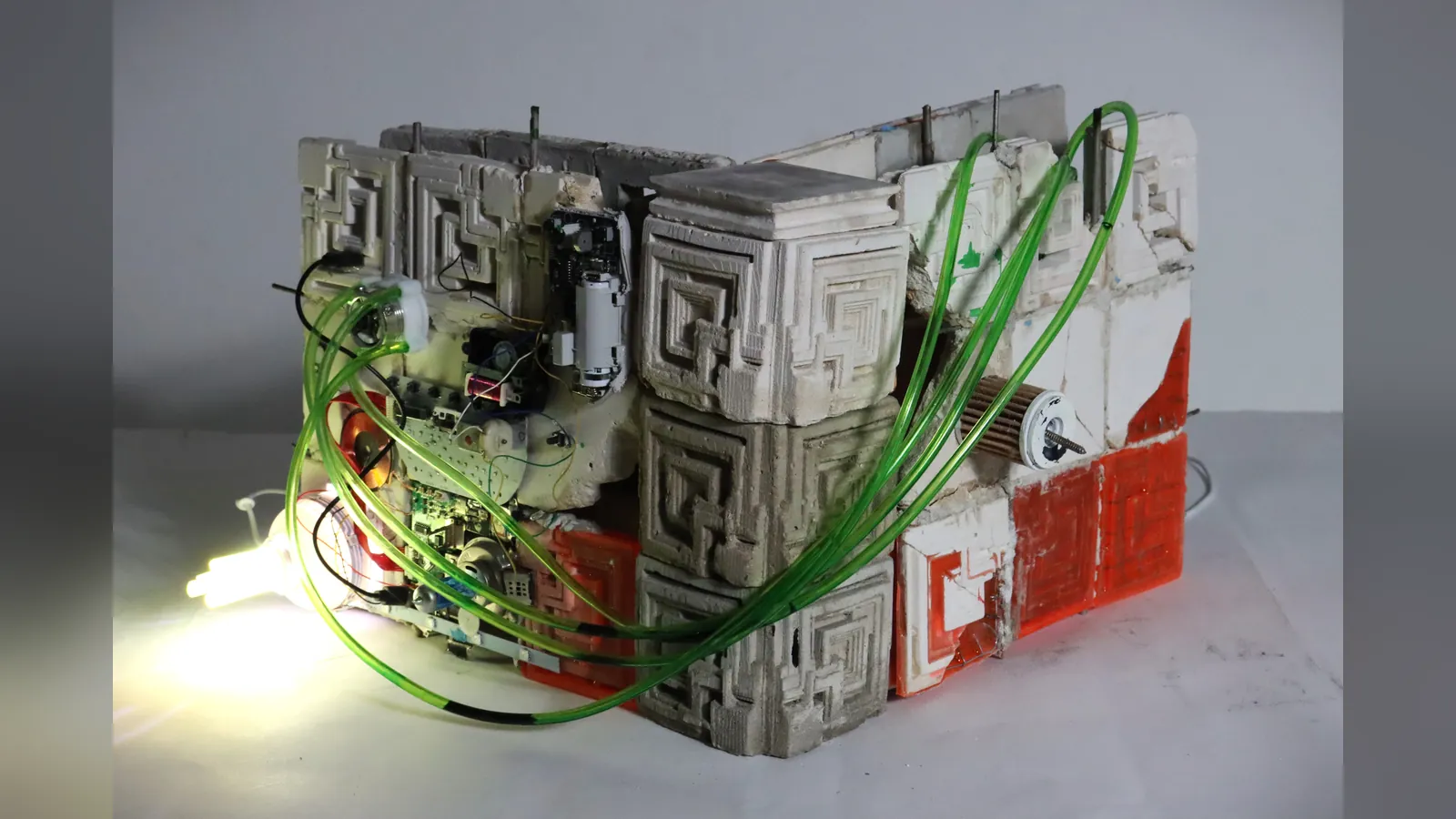
A Gift for the Replicant is a fragment of a future ruin: a corner wall built from concrete textile blocks inspired by Frank Lloyd Wright's Ennis House, the iconic architectural backdrop of Blade Runner. It is a world built as a gift for the Replicant.
The wall exists in three states: pristine concrete blocks, representing the perfect copy and implanted memory; broken, unrepaired blocks, representing trauma and the moment of becoming real; and hybrid blocks repaired with electronic waste (circuit boards, wires and dead technology), representing the Replicant's new, synthetic identity.
Viewing the work is a kind of archaeological discovery. From the outside, the wall looks almost intact, a perfect architectural facade. But as you move closer, you see the fractures. The corner, where the two walls meet, is the epicenter of transformation, where ancient concrete gives way to the electronic future.
To make the piece, the author used Tripo to generate the original 3D block model from architectural reference imagery, 3D-printed a master, made a silicone mold and cast multiple blocks in concrete. The author then deliberately broke specific blocks and repaired the damage with discarded electronic components. The ancient material (concrete) and the digital future (e-waste) fuse together into a physical manifestation of the Replicant's struggle. Rhino, Bambu Lab and Blender were also part of the process.
It is not a perfect replica of the past, but a hybrid artifact of the future: a gift for the one who asks, "Am I real?"
How Tripo was used
Tripo produced the starting point of the piece: the original 3D block model.
- Block prototype: the author generated the first block model with Tripo from architectural reference imagery.
- From model to concrete: the model was 3D-printed as a master, used to make a silicone mold, and cast into the concrete blocks that make up the wall.