Description
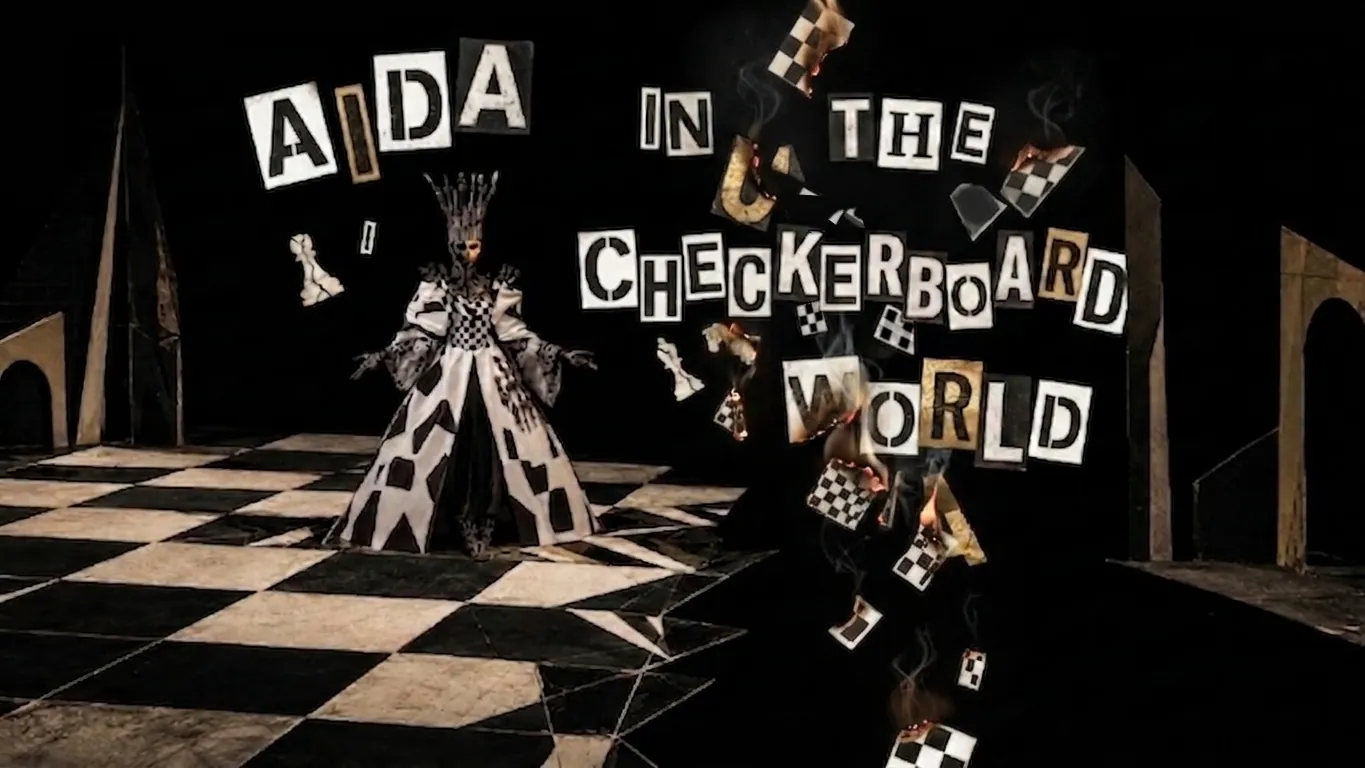
AIDA in the Checkerboard World: The Priest's Gambit is an experimental opera film and world-building project that reimagines Verdi's Aida as a monumental chessboard society, where every character is assigned a piece, a position and a rule of movement. Ramfis the priest begins the film as the narrator of the system's rules; by the end, he discovers that he is one of the pieces too. It is a gift for the one who moves on her own.
The project began as a scenographic reinterpretation of Aida: a physical stage model, a chess-piece character system, sculptural costumes, a monumental moon/screen and architectural sets, developed into one coherent visual world. The film carries this physical design into moving image through a hybrid process of model-making, BJD character photography, generative image and video, AI-assisted music, sound design and manual editing. Rather than letting generation decide the world, the original scenography acts as its constraint: architecture, costume, material, hierarchy and movement set the rules that every generated image must live within.
The result sits between opera, cinema, miniature theater and synthetic image-making. Its black-and-white ceremonial world gradually loses its stability as bodies move beyond their assigned positions and organic matter enters the constructed stage.
Midjourney was used for image generation and visual development; Kling, Runway, Seedance and Happyhorse for generative video and image-to-video experiments; Suno for AI-assisted music; and DaVinci Resolve and Adobe tools for editing and post-production. The physical stage models, BJD styling and photography, character designs, scenography and original imagery are the artist's own. Before the hackathon, the project already had its checkerboard-world concept, character and costume designs, stage models, BJD character work and early visual studies; during the event, the author expanded the world with a new Tripo-assisted 3D workflow, building selected characters as 3D models and bringing them into the wider digital world-building.
How Tripo was used
Tripo is the bridge from character concept design into the project's 3D world, playing a supporting role in a hybrid workflow.
- Character models: the author used Tripo to turn selected 2D character designs into 3D character models, extending the chess-piece costume language into space. This 3D workflow was added during the hackathon.
- Hybrid workflow: the generated models were used alongside physical models, BJD photography, generative image and video tools and manual editing. Tripo served as a supporting bridge between character concept design and the project's 3D world-building rather than as the primary creative driver.