Description
FormEcho is a digital-to-physical system that turns personal images and ideas into forms people can actually make. A user starts with a photo or a prompt, uses Tripo to generate a personalized 3D model, and brings that model into FormEcho for manufacturing.
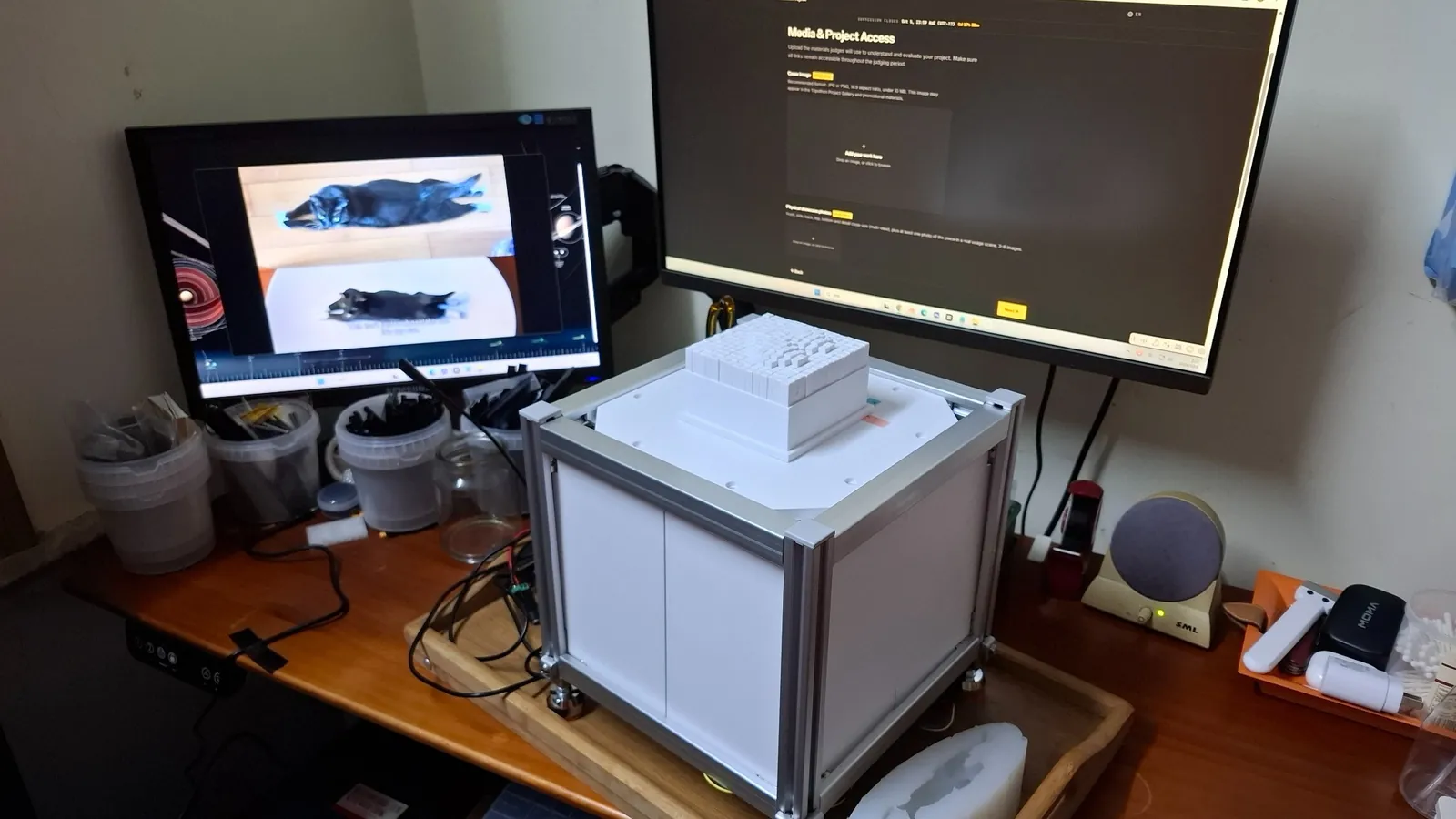
FormEcho explores two connected paths: generating printable mold structures for silicone casting, and an experimental reconfigurable surface driven by digital height data. The idea comes from a simple question: if every memory is different, why should every new shape require a completely new mold?
By connecting AI-generated 3D with real fabrication, it lets a personal memory become something tangible, usable and uniquely yours. It is a gift for people who want to hold their memories in their hands.
Before Tripothon S1, the author had developed the core concept and a manually configured 80 × 80 reconfigurable mold as an early physical proof of concept, along with preliminary molding tests. During the event they built the FormEcho software workflow, brought Tripo-generated models into the design-to-manufacturing process, created the digital height-data pipeline, built and tested a digitally controlled reconfigurable height-array prototype, and completed new mold-to-physical-result demonstrations. OpenAI ChatGPT and Codex assisted with software development and translation.
How Tripo was used
Tripo is the bridge between a personal memory and a physical, castable result.
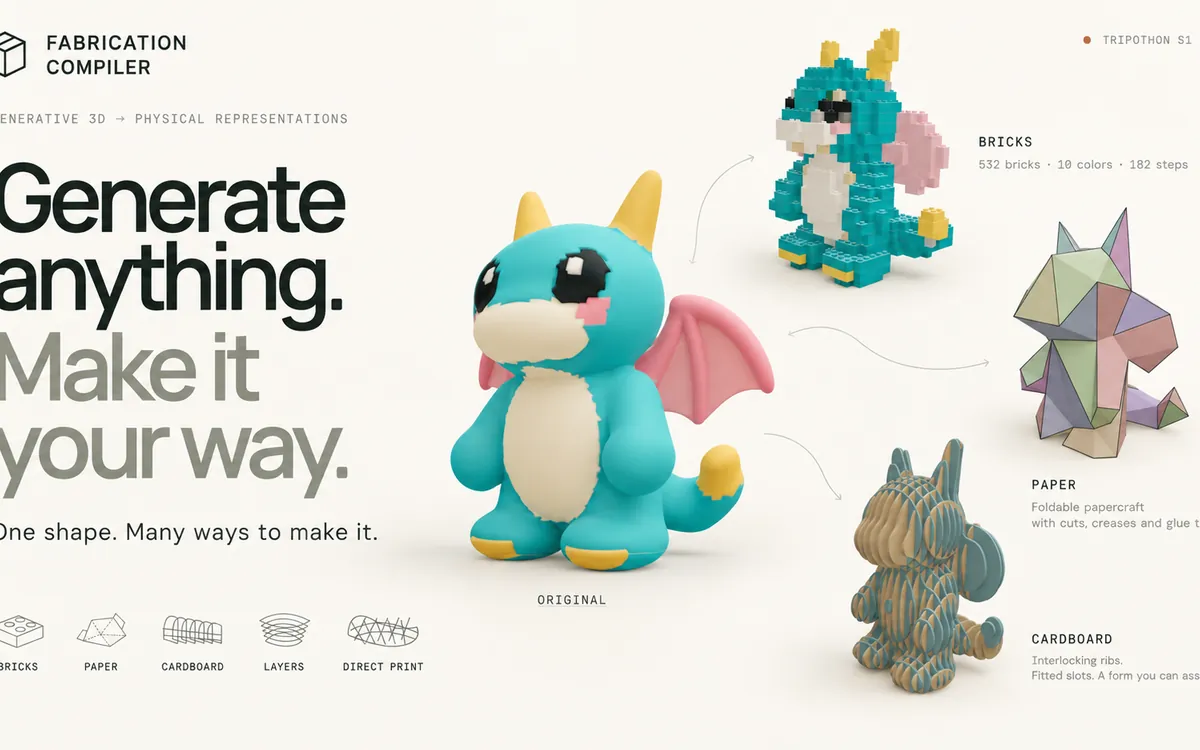
- Starting models: Tripo turns the user's photos and prompts into 3D starting models, replacing manual sculpting.
- Into manufacturing: FormEcho carries those models into a manufacturing workflow, preparing printable mold structures and translating the geometry into target heights for the reconfigurable surface.