 Try it live
Description
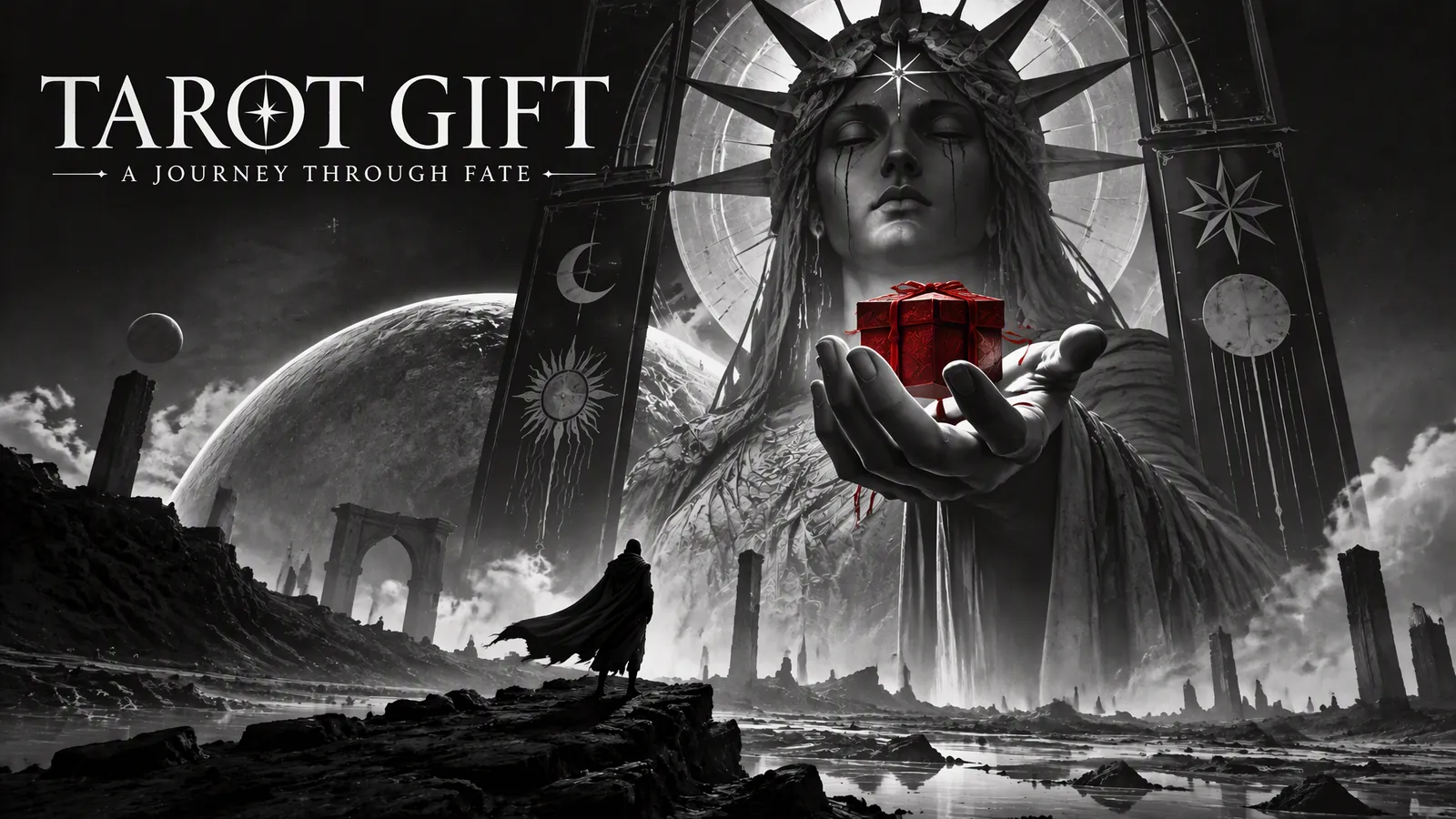
Tarot Gift is set on a black-and-white megastructure planet. A traveler leads a horse across it, and only one thing in the whole world is red: the single gift they have to give.
You choose tarot cards for the traveler, and the cards decide what they meet. In every encounter you can give the red gift away. The gift reverses the tarot and rewrites fate: whoever receives it changes, and whoever you pass by stays in the dark. At the end of the journey, the universe tells you where your heart was given.
Here, tarot does not define you or tell fortunes. It is a mirror: the order of your cards, your hesitation, who you gave to and who you ignored are how the game reads your state of mind. How you walked, gave and stopped matters more than what you drew. It plays like a quiet pilgrimage, black and white, slow and lonely. You only ever do one thing, give or don't, and every act of giving shows who you are.
The gift can reverse fate because it does not belong to fate. Tarot is the script, and the traveler only walks it; the gift is something the traveler brought along, outside the script, the one part of them fate never took: their heart. Giving it away proves that fate can write what happens, but not how a person responds. Psychology calls this agency, the freedom to choose how we face what we cannot choose. The reversal is not magic but will. Will does not always change the world, but it changes how a person faces it, and that is where fate begins to loosen.
Who is the gift for? On the surface, the tarot figures the traveler meets. Deeper down, the traveler themselves: what they give away is what they are. The tarot card designs draw on the Angelarium tarot. The game is provided as source code and needs to be built locally.
How Tripo was used
Tripo drove the game's entire scene pipeline.
- Batch assets: using the Tripo API as a batch asset engine, the team generated 90% of the game's assets, including the megastructures, tarot statues, terrain and props, with Tripo P2 producing low-poly models and auto-generated textures.
- Concept art: Tripo was also used to call GPT Image for concept art.
- From generation to layout: paired with GPT Astra for asset replacement and scene placement, Tripo formed a complete workflow from generation to layout, with characters generated and rigged along the way.