 Download source
Description
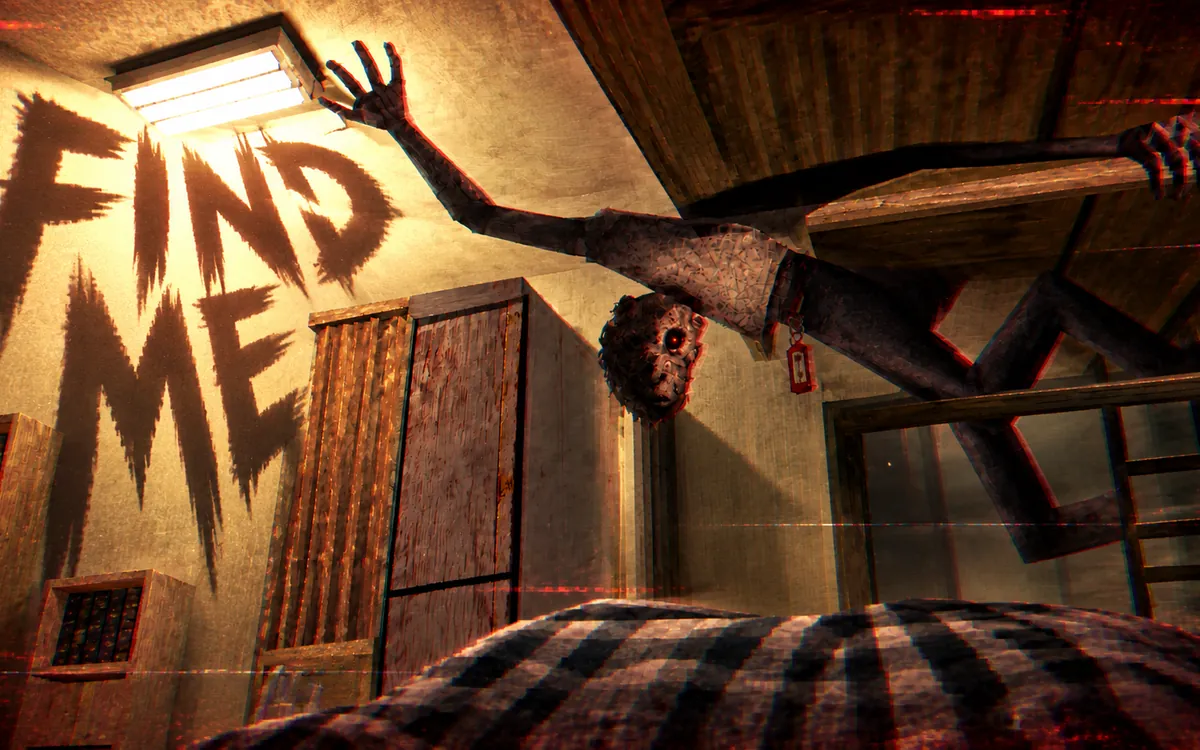
A Gift for Past Oneself is a 3D roguelike action game that a team with no prior game-development experience built in 9 days with the help of AI tools. It takes place in a cyberspace called the Data Ruins, where programmers' real-life nightmares have turned into monsters: red "error code blocks", long-legged "empty coffee cups", broken data cables, and "ibuprofen capsules" that torment players by healing themselves. The final boss is a giant, shielded "Dark Lin Zhou", who stands for the team's past selves, full of bugs, exhaustion and regret.
At its core is a roguelike build that gets stronger the more you pick up. Your weapon is a folded umbrella: fire with the left mouse button and it automatically locks onto the enemy ahead, with floating damage numbers, screen shake and impact feedback on every hit. Defeated enemies drop coins, and opening a chest grants one of 10 random pieces of gear; attack, attack speed, movement speed and other stats stack multiplicatively. As the waves go on, more kinds of monsters appear. Once you reach the kill count, the boss arrives, and you need to collect the memory fragments scattered around the arena to break its invincible shield before going all out. Beat the boss and the scene shifts to a red filter as you move on to the next level.
This gift is for the team's past selves: defeating your inner demons is the best way to make peace with yourself.
The team used a minimal AI-assisted workflow. Every 3D model was generated with Tripo, UI icons and distant backdrops were drawn with AI image tools such as Tencent Hunyuan, and everything is loaded dynamically by code at runtime. The team wrote the game logic themselves with help from large language models such as Claude and Doubao, and the sound effects are synthesized in code. To hold a smooth 60 fps with the screen full of monsters, the game replaces traditional physics collisions with object pooling and pure math distance checks, so you can mow through whole crowds of enemies. It is provided as Unity project source code and needs to be built locally.
How Tripo was used
Tripo was the game's only source of 3D assets, fully replacing traditional hand modeling.
- Batch generation: scene models such as gates, pillars and ruins, plus the models and textures of every monster and boss, from the coffee cups to the ibuprofen, were batch-generated with Tripo in minutes.
- A fast content pipeline: the team extracted and adapted materials, swapped in physics colliders and dropped the models straight into Unity for playtesting. Together with code that loads and attaches assets automatically, plus AI-drawn UI icons and backdrops, it took them from concept art to a playable game end to end.
- Its weight in the project: the pipeline cut development time dramatically and let a programmer with no prior experience handle all the visuals. Without Tripo, the team says, they could never have built a 3D world with large scenes and so many kinds of monsters in 9 days.