Description
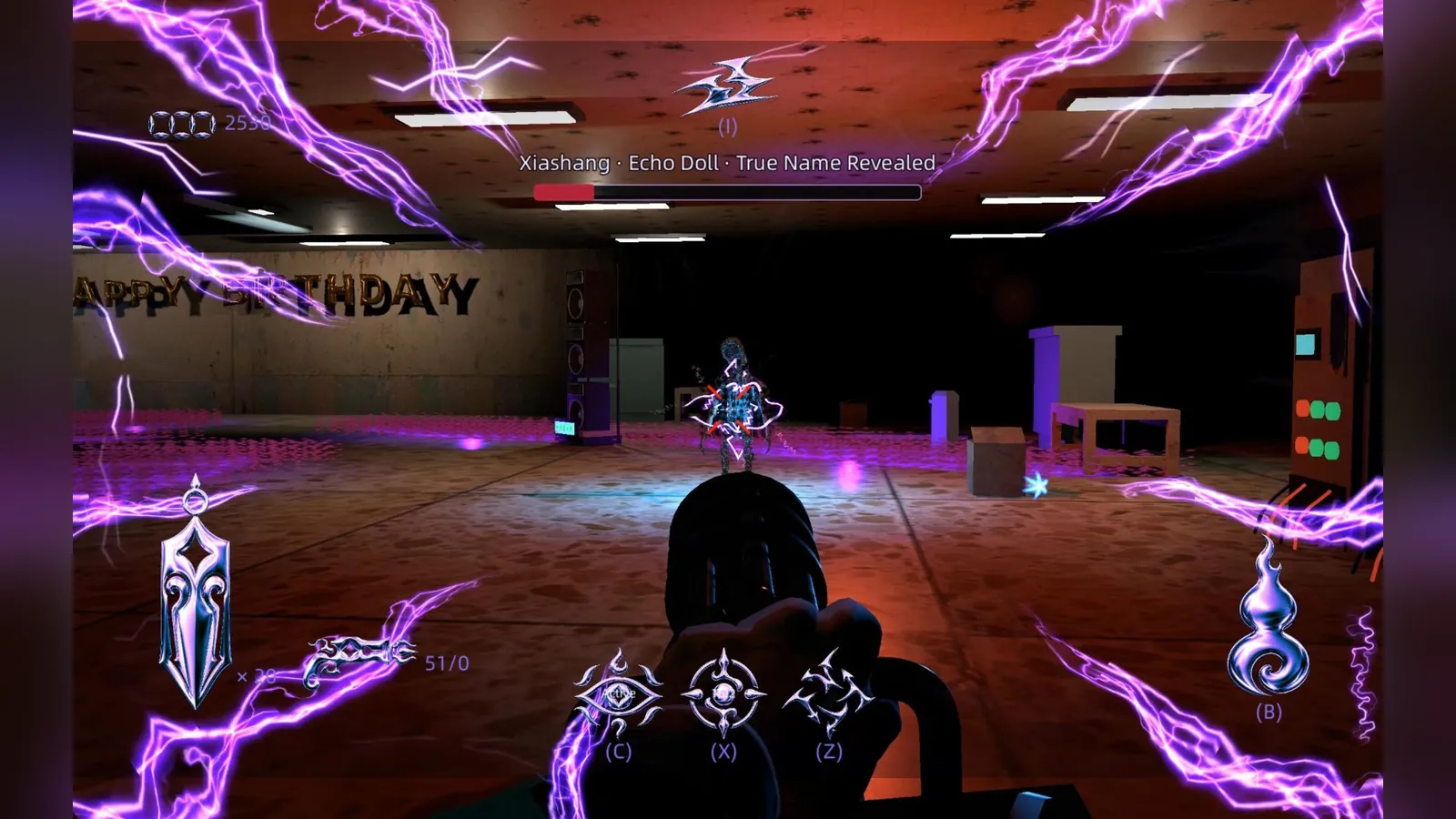
Century's End Exorcist is a dreamcore first-person shooter, still in development. It is dedicated to the author's grandfather, who was once a Taoist priest, and to the childhood they spent together.
You play an employee of an exorcism company, installing East Asian exorcism techniques (thunder magic, Nuo opera and curses) into plugins to create your own combat build, then taking on a roguelike run through randomly generated, labyrinthine spaces.
The demo level is an abandoned indoor children's amusement park. As a rookie employee, you are conducting a second investigation into a ghostly incident caused by a fire that, according to the statistics, left no casualties. Head for the banquet hall to uncover the truth: fight enemies with firearms and Thunder Arts, explore rooms, collect evidence and defeat both phases of the boss. WASD moves, the mouse looks around, left click fires and right click aims, C, X and Z cast the three active Thunder Arts, I opens the skill tree and B opens the backpack and store. The game starts in English and can be switched to Chinese from the start screen.
Before the event, the author had written the story, made concept designs for some characters and enemies, and built and tested Godot prototype scenes (without art). The prototype mainly tested procedural level generation: room connections, doorway placement, traversability and reproducible random seeds. The game is developed in Godot and Blender, with OpenAI Codex assisting programming and OpenAI image generation assisting selected artwork and textures. Windows and macOS builds are available, and 16 GB of RAM or more is recommended.
How Tripo was used
Tripo is a key link in the author's human-directed production loop.
- What it makes: in a role-based workbench built on VS Code and Codex, Tripo turns concept artwork into enemy, player and selected environment models.
- After generation: scene-engineering and rigging/animation AI roles refine the assets in Blender before they are integrated and playtested in Godot.
- Time saved: less initial modeling work frees time for combat, visual identity and level design.