Description
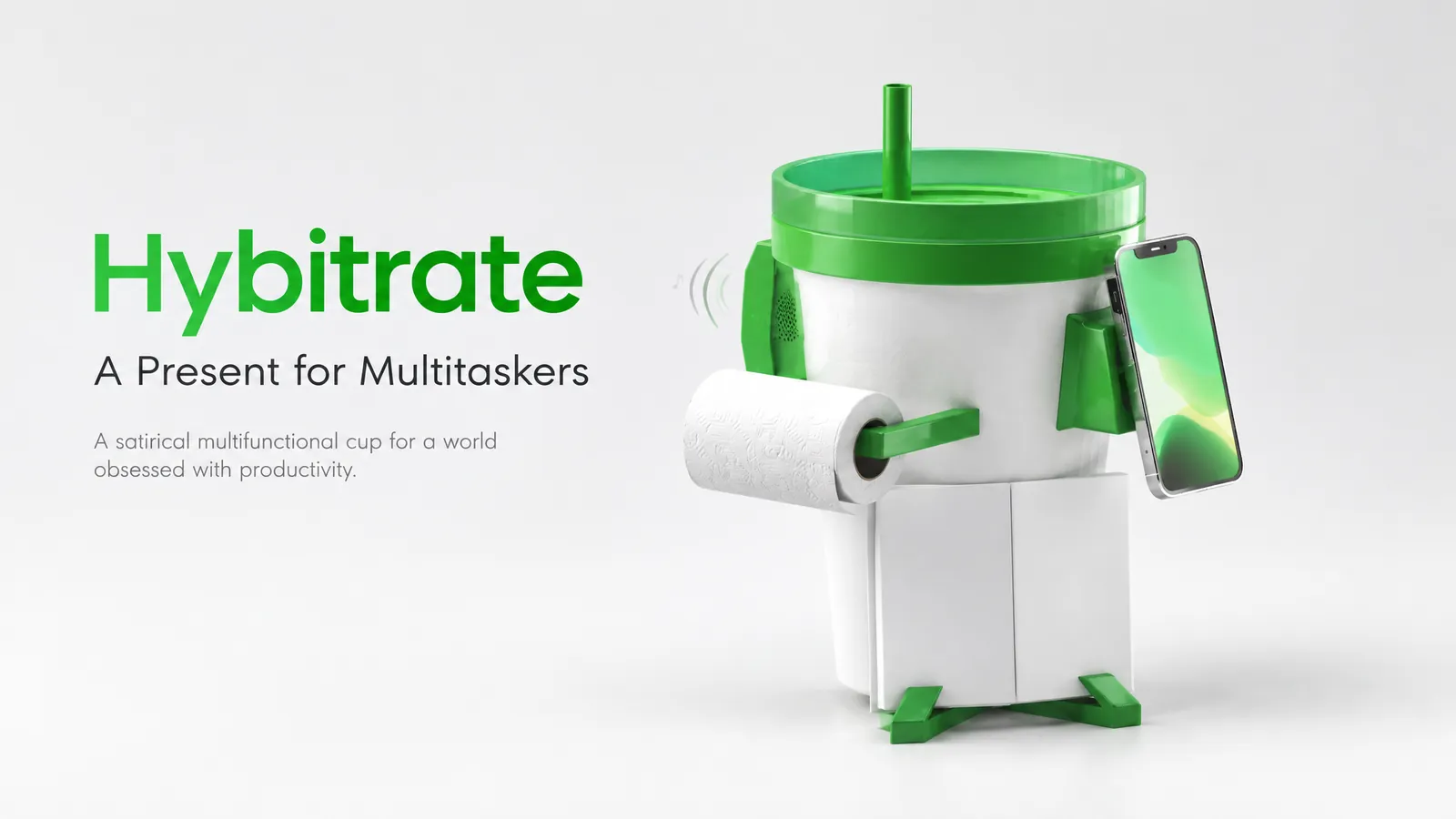
Hybitrate is a fictional multifunctional cup designed for a world obsessed with productivity. It combines everyday functions such as a phone stand, a paper roll holder, a speaker, a book stand and other attachments into a single drinking vessel.
At first, the extra functions seem useful. But as more features are added, the cup grows larger, more awkward and harder to use for its most basic purpose: drinking water. The project uses humor and exaggerated product design to question the belief that more functions always make a better product.
Presented as a polished commercial object, with branding, promotional materials, multiple color options and product ads, Hybitrate deliberately mimics the language of contemporary tech and lifestyle products. As "A Gift for the Multitasker," the cup is both a useful-looking product and a satire of modern productivity culture. It asks a simple question: when everything is designed to help us do more, do we actually become more efficient, or do we just make everyday life more complicated?
The original product design, 3D cup model, branding, promotional graphics and animations were created by the author in Blender and Canva; experimental accessories generated with Tripo were modified by the author and integrated with the existing cup model in Blender.
How Tripo was used
Tripo was used in the concept exploration stage to generate experimental 3D accessories for Hybitrate.
- Exploring attachments: Tripo's AI modeling tools helped explore unconventional attachments and exaggerated multifunctional designs.
- Into the cup: the generated accessories were refined and integrated with the original cup model in Blender, combining AI-assisted experimentation with traditional 3D modeling, a workflow that supports the project's critique of excess functionality and productivity culture.