 Try it live
Description
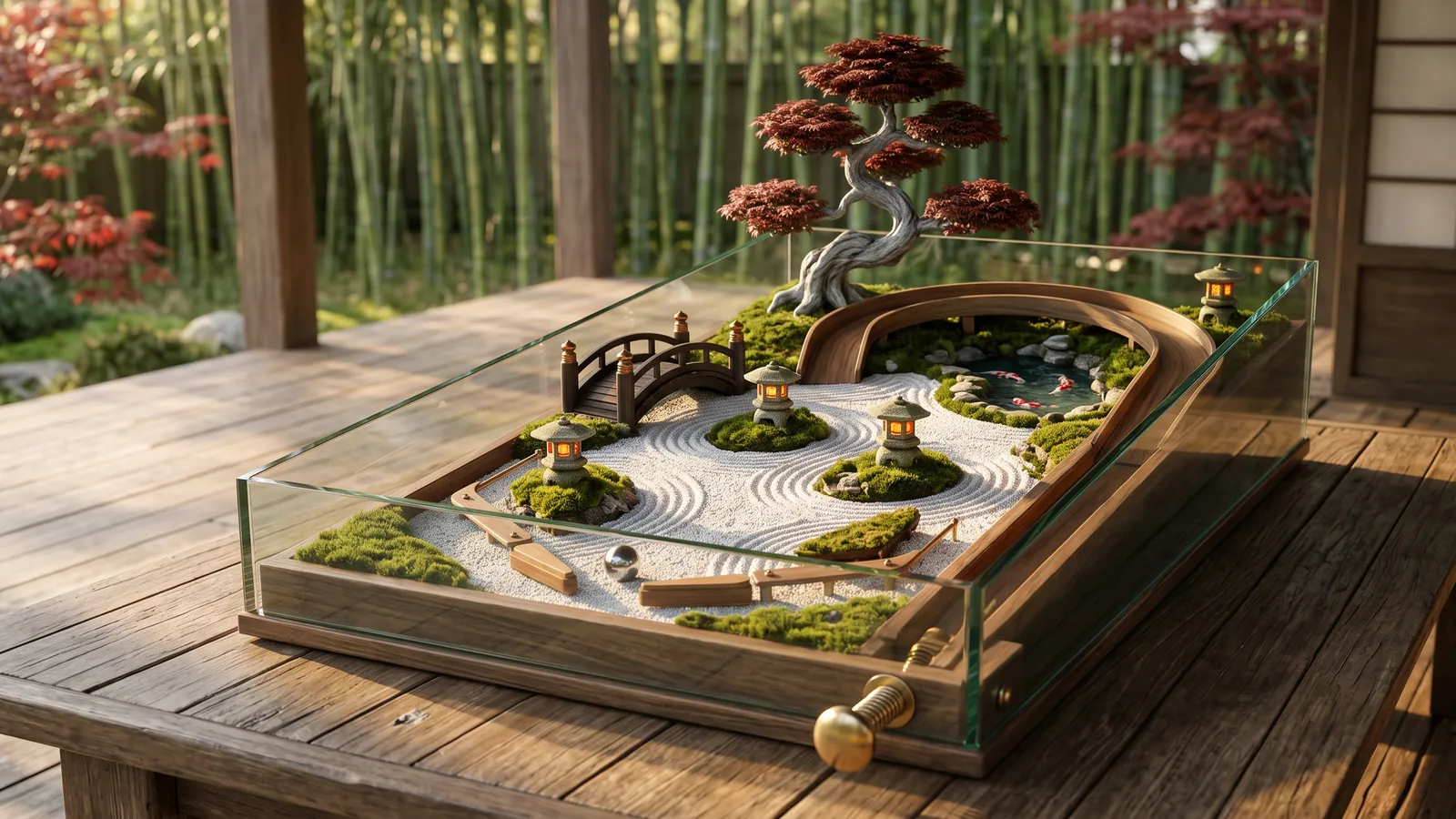
Terravia Quest is a pinball game set inside living gardens, played in the browser. Each table is one of the world's gardens under glass, and every shot helps it come to life. It is a gift for those who may never visit the world's great gardens: a small world that grows as they play, where the ball never harms a creature and the only way to win is to help things grow.
There are three gardens:
- Moss and Maple (Japan): raked white gravel, moss islands, stone-lantern bumpers that light up when hit, koi beneath a wooden bridge, and a maple that grows into a full red canopy.
- Lotus and Moonlight (China), inspired by the classical gardens of Suzhou: a pebble-mosaic floor, jade lotus bumpers, a moon gate in a whitewashed wall, a pavilion over a lotus pond, and an old plum tree that comes into blossom.
- Water and Frangipani (Bali), inspired by Bali's royal water gardens: black volcanic stone, carved stone basins with floating frangipani, a ramp shaped like rice terraces, a candi bentar gate, and a frangipani tree that blooms.
Light the bumpers, wake the seed pods and ride the ramp. Every hit adds to the garden's energy, and the garden answers. Chains of quick hits multiply your points, and a narrated cinematic tour shows each garden up close. The game plays with a keyboard or touch.
Tripo made most of the 3D models, World Labs Marble generated a 360° garden panorama around each table, and the leaves and blossoms, raked gravel, pebble mosaic, volcanic paving and rice terraces are generated in code. It all runs on the team's own WebGL2 renderer and pinball physics, with no game engine.
How Tripo was used
Tripo made most of the 3D gardens.
- Japan: the maple trunk, stone lanterns, mossy rocks, bridge and koi.
- China: jade lotus bumpers, Taihu stones, the moon gate, walls, pavilion, lotus and plum trunk.
- Bali: stone basins, the candi bentar gate, fountain, bale pavilion, volcanic rocks and frangipani trunk.
- Beyond static models: the bumpers are Tripo models that light up when hit. Leaves and blossoms grow from branch tips detected on each trunk, and the koi was split into head, body and tail so it swims.