 Download source
Description
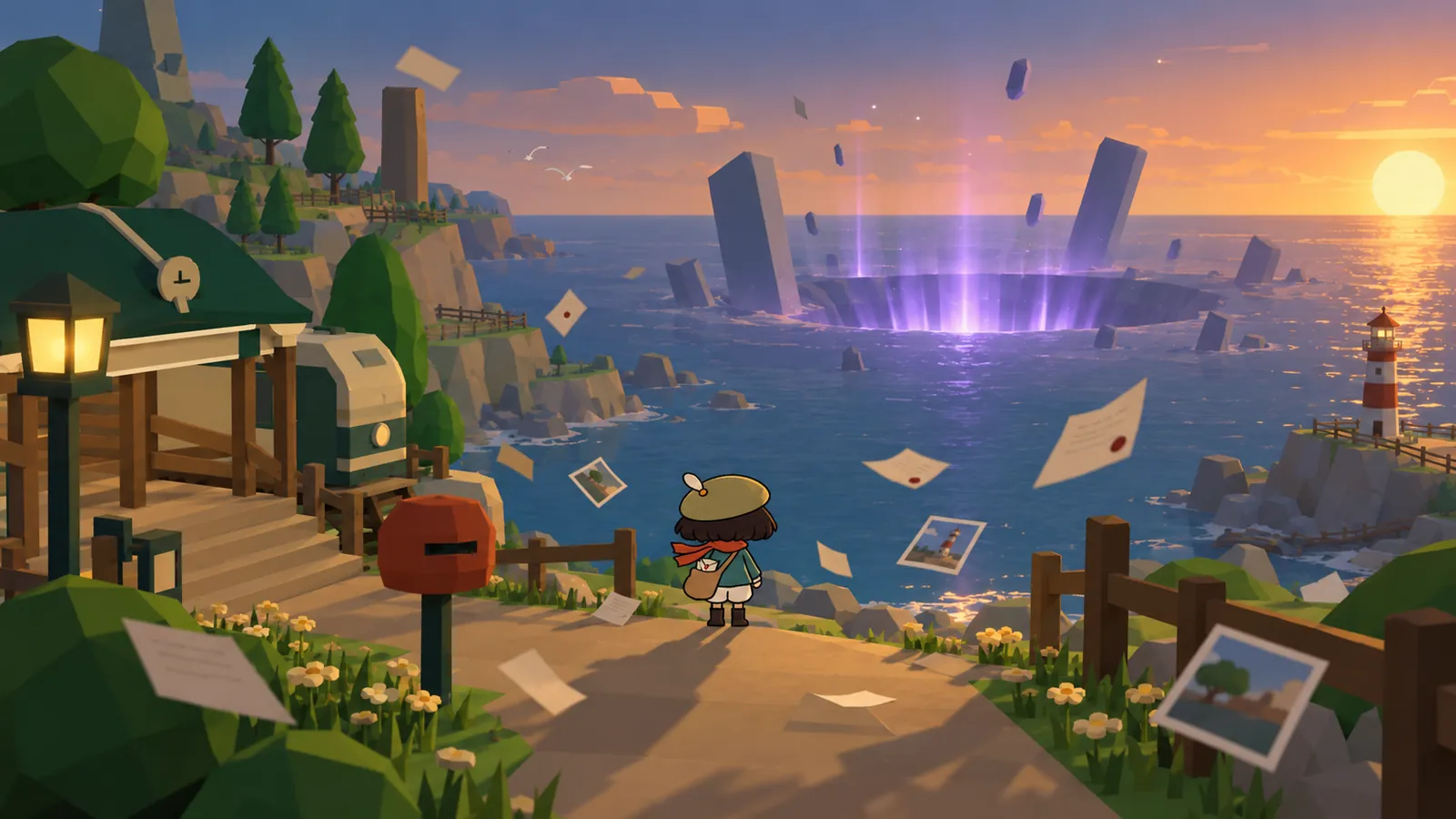
Set across five islands at the Earth's core, the Bottomless Abyss is a photography adventure that pairs 3D scenes with paper-cutout 2D characters. You play Xiaoman, who arrives at the Birth Island, where someone has set out hot tea and an empty chair; a damp forest of root bridges; a snowy mammoth coast; a lake that mirrors the aurora; and a desert where springs still flow. Animals long extinct on the surface live here. Like Xiaoman, they were recreated by the Earth's core from old photographs and records.
Their paper-thin forms keep the marks of having been recorded, while the 3D world, one you can walk into, circle around and change, holds the today that no record ever wrote down. Dodos pick new places to drink, and mammoths detour around their old routes. They have species names, and habits of their own.
Camera in hand, you wander the islands slowly: watch the animals, wait for behaviors to unfold and find the right angle for each shot. You also repair waterways, move structures that block migration routes, and piece together clues hidden in old photos and letters. Every island is worth revisiting: the environment keeps your changes, and the people indoors remember what Xiaoman has done. Along the way, she gradually discovers that she is the next Xiaoman, born to fill the gap left when the previous mail carrier was gone.
This gift is first for Xiaoman, and also for everyone who was once expected to live as someone else. The story leaves the choice to her: where you come from can be recorded, but where you go should be your own decision. The photos you take are both a memorial to the lives that vanished and proof that Xiaoman has begun to write a life of her own.
The game is built on Three.js, with music and ambient sound synthesized procedurally through Web Audio, and the team packaged it with Electron as an offline Windows game. It is provided as source code and needs to be built locally.
How Tripo was used
Tripo turned concept designs into 3D assets you can explore and interact with, moving the models from static display into the game's story.
- A stage for the photography: players circle these models to observe and frame their shots, then use the photos to advance quests, collect memories and uncover the story.
- The workflow: assets generated with Tripo go into the Three.js scene and are integrated with the animation, collision, camera, quest and save systems, ending up in an offline Windows build. Tripo drives the 3D content, while the code and interaction systems shape it into a complete experience.