

01 / OVERVIEW
Background and motivation
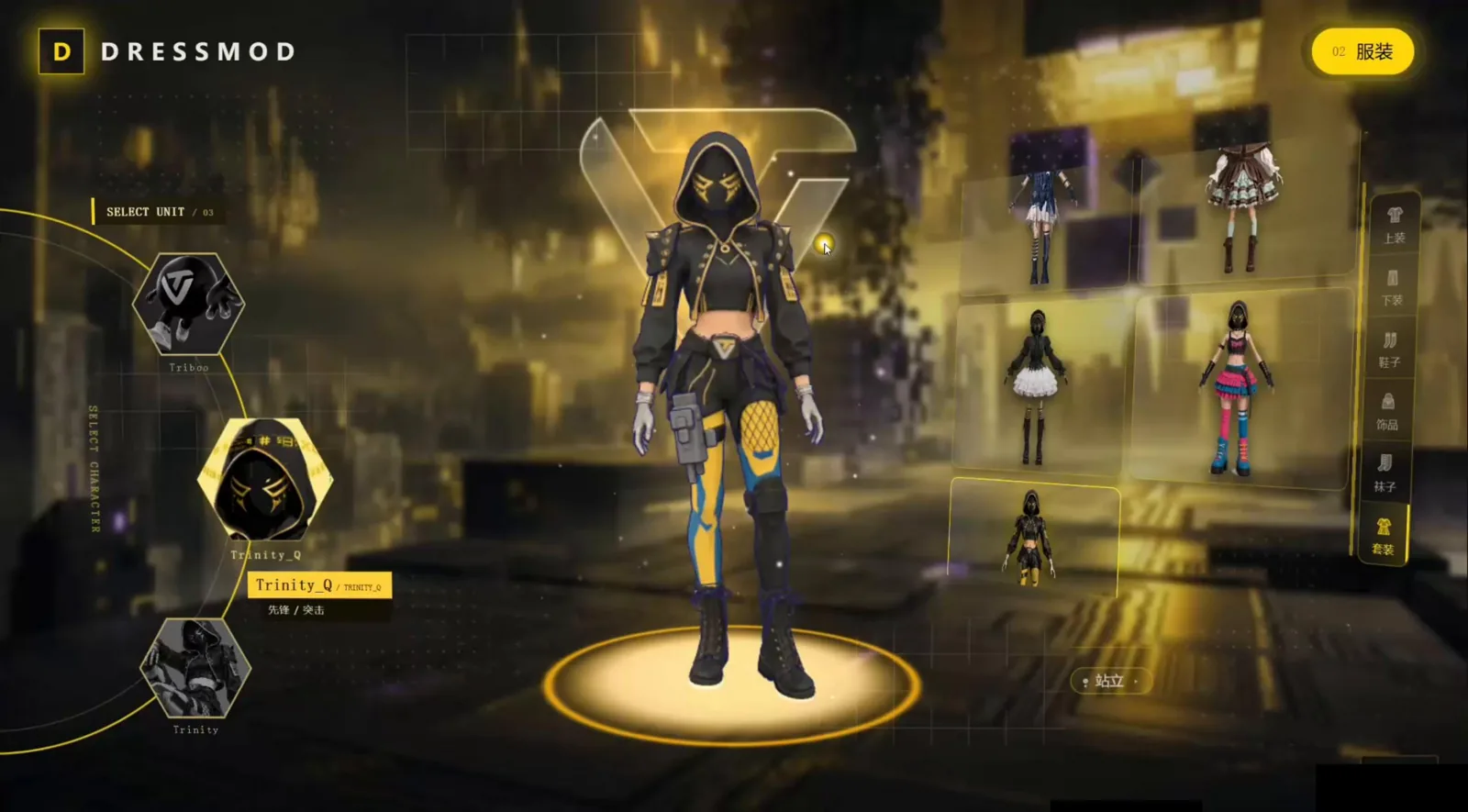
As the IP character system keeps growing, every piece of content has to use the character as the brand’s visual carrier. In practice, though, garment assets had long been scattered across project files; reusing or even finding them depended on asking around, with no single place to manage them. That pain point is why the team set out to build a dress-up system for the IP character: gather the scattered garments in one place and give later productions an easy way to reference and reuse them.
At the same time, fast-moving generative AI opened a new way to validate ideas. The project takes Tripo-generated 3D garment models as its foundation, explores how AI-generated clothing can follow a character’s motion correctly, and tests whether AI can substantially simplify the traditional rigging and fitting pipeline. Unlike conventional dress-up games where players pick from preset outfits, generative AI lets users design a garment themselves and wear it instantly — the project’s core line of exploration.
02 / OVERVIEW
Generating and optimizing garment models
Mesh standards and polycount control. A garment asset that can actually ship in a game has to meet three basic standards: clean, well-formed topology with no stray or broken faces; textures with enough detail and quality; and an overall look consistent with the game’s style.
Early in the project, Tripo’s garment models were generally too dense to drop straight into a real-time game scene, and brute-force decimation lost detail and left surfaces coarse. With the P1 update, generated models could hold basic garment shape at lower polycounts, which was enough for basic dress-up. P2 then raised low-poly detail and edge-flow quality further, bringing the output closer to what game assets technically require.
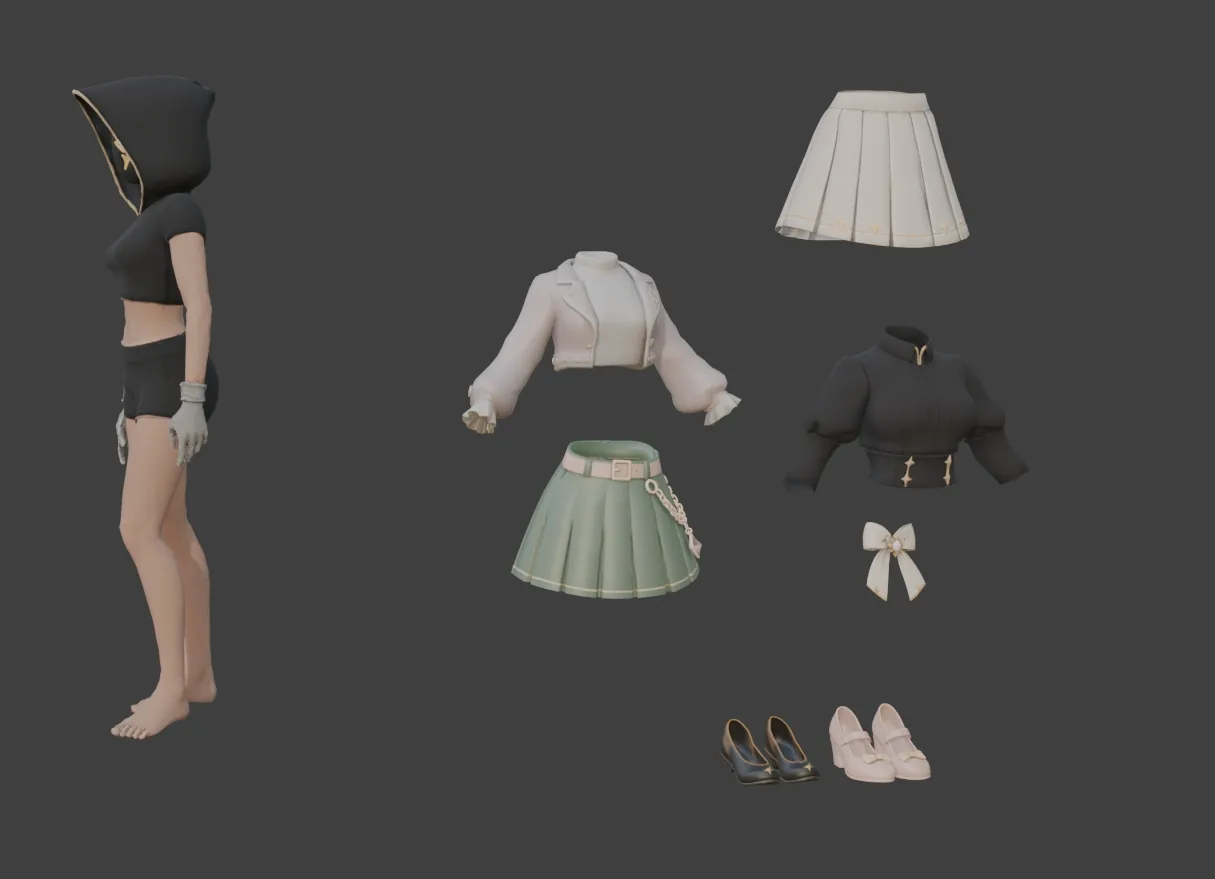
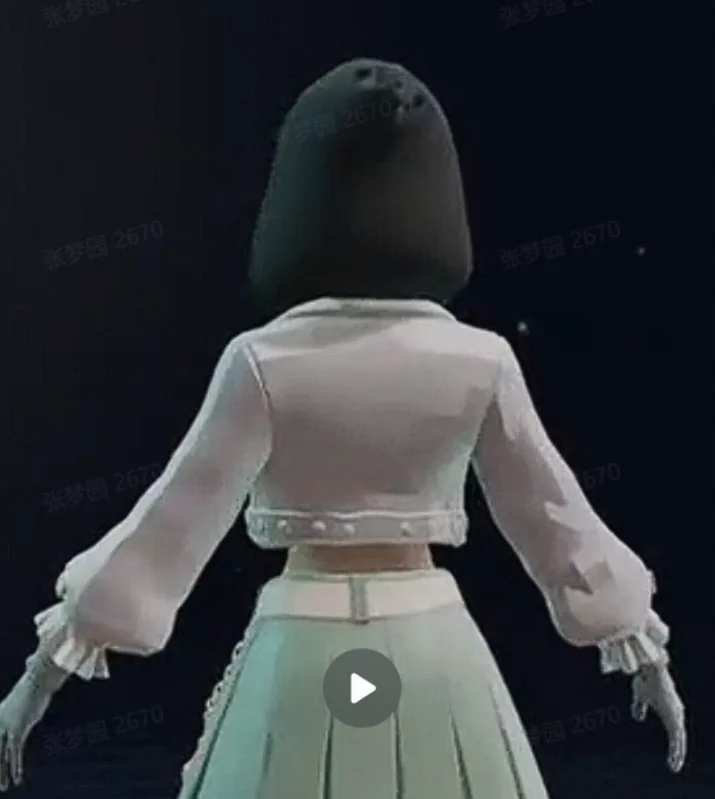
Cel-shaded stylization. Even with P2’s big step up in topology, web-side 3D rendering still has limits in material quality. So the project adopted a cel-shaded (3D-as-2D) look: it hides texture-level flaws and cuts down manual mesh fixes, and it unifies the visual style of garments and UI, lifting the finish of the whole product. Recent stylized-texture tests show room to push further, with materials and lighting layers still to refine.
03 / OVERVIEW
Fitting garments to the character
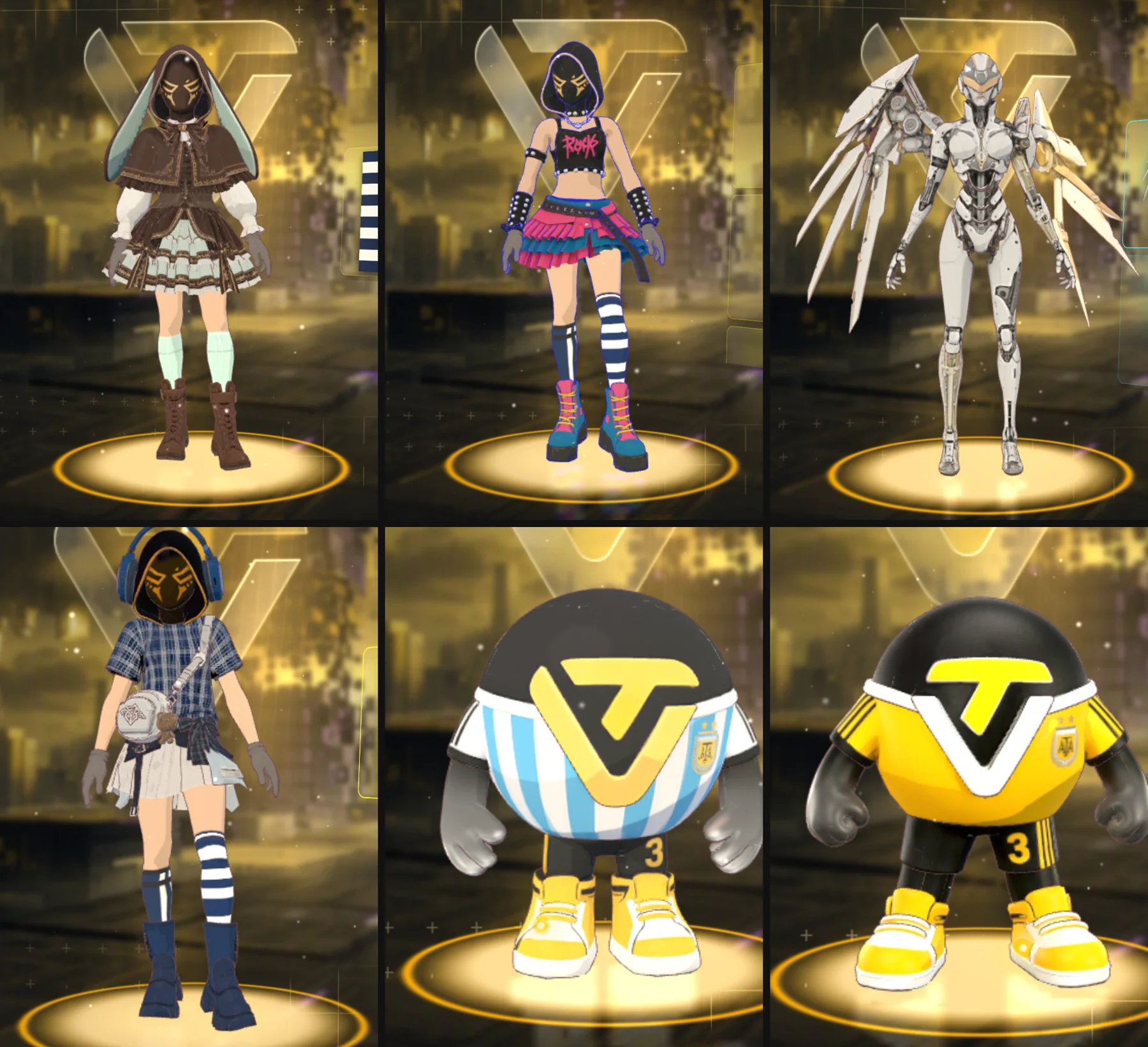
The system is built around a chibi-style IP character with five complete outfits, and individual pieces can be mixed freely. Fitting garments to the character is the core technical challenge, spanning three layers: weight assignment, motion following and clipping prevention.
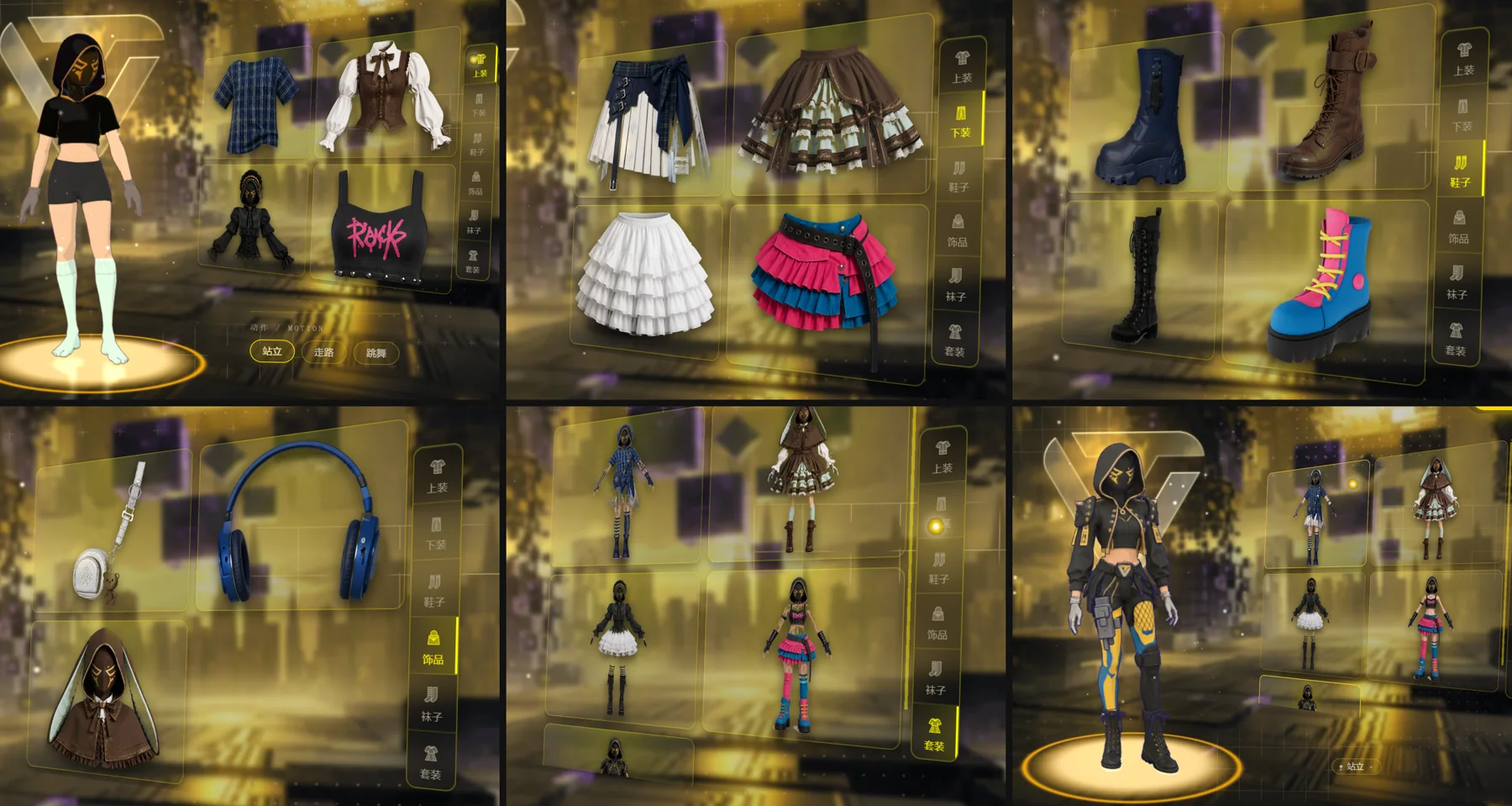
Weight inheritance and tearing. Garments deform with the character only if bone weights are assigned correctly. Tight clothing can simply reuse the body’s existing weight map so it moves in lockstep with the body. But for skirts, bunny ears and other pieces that do not hug the body, inheriting the body’s weights directly lets opposing motion — the legs, most of all — tear and distort the garment mesh in ways that make no sense.
The spring-bone solution. We first tried cloth simulation for this, but its performance cost is in a different league from bone-driven motion, and complex models need pinned regions painted by hand — slow to produce and a poor match for real-time rendering in the browser.
In the end the project gave garments spring bones, built from three core elements. First, an independent bone chain: lay a chain of bones along the garment’s form (for a skirt, from waist to hem), each bone a child of the previous one, and paint the garment mesh’s weights onto that chain. This fixes tearing at the root — the garment gets its own motion channel and is no longer pulled apart by the leg bones.
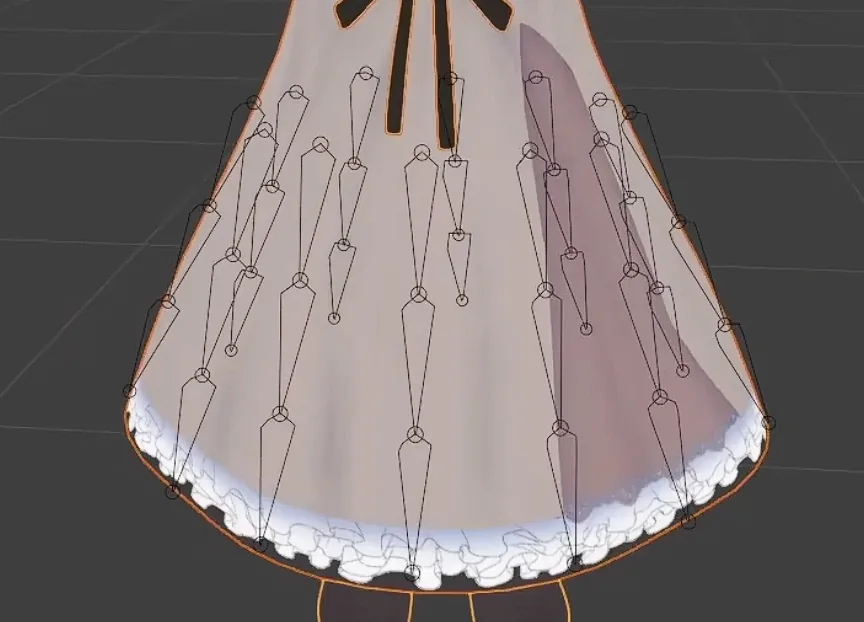
Second, spring-and-damper dynamics: the chain is not pre-animated; it is solved every frame from the character’s motion. It behaves like a real spring — as the character moves, the bones lag from inertia, the spring pulls them back toward their rest position, and the damping parameter controls how fast the swing decays, producing natural sway.
Third, colliders: indispensable for clipping. Spring bones alone give the skirt its own motion channel but cannot make it avoid the body. For long strides, wrap the thighs in capsule colliders so the skirt bones sense the obstacle and are pushed away naturally, preventing clipping.
Together, these three techniques form a general reference framework for animating clothed characters. In fact, many virtual-character tools already ship all three as standard features.
04 / OVERVIEW
Where AI speeds up rigging and animation
Traditionally, once AI has generated a garment, rigging and fitting are heavily manual: bind the bones by hand, then tweak parameters over and over until it looks right. This project had AI auto-rig the skirts, bunny ears and other accessories instead. The prompt states the target behavior — skirt and accessories bound to spring bones, no clipping between skirt and thighs in motion, bunny ears following the head with natural sway — and AI binds a sensible bone structure and tunes the parameters accordingly.
This squeezes manual work down to a sliver. Ideally you hand AI the garment model plus a description of what you need and get back a character garment asset that moves correctly — the dress-up web page in this project was built exactly this way. The same approach carries over to animation software and game engines.
On the animation side, the basics of AI rigging and AI animation are maturing. In the team’s experience, giving AI a reference video together with a rigged model is enough for it to retarget the motion onto the new model. For animators, that means far less repetitive labor and more time for creative work.
05 / OVERVIEW
Prep work and workflow summary
AI speeds up rigging and fitting considerably, but for a freshly generated model to fit the character directly, a few pieces of prep work still have to be done first:
- Model calibration: once you have the model, confirm its proportions against the base model and adjust orientation and origin to sensible values.
- Garment type: judge the category correctly — tight and loose garments need different weight strategies.
- Rigging: give loose garments spring bones, build the bone structure to match the garment’s form, and set reasonable spring and damping parameters.
Overall, AI replaces repetitive execution; judgment and decisions still fall to people. For creators, AI’s core value is not doing the work for you but drastically shortening the distance from idea to visible result — only when an idea can be shown quickly can it be judged, and then iterated and improved.
06 / OVERVIEW
Closing
This dress-up mini game strings AI generation, rigging and fitting, UI interaction and real-time display into one complete technical loop, and confirms the potential of AI in 3D garment generation and character fitting. From quality tuning of generated models, to spring-bone motion solving, to the efficiency gains of AI auto-rigging, every step shows how AI and human judgment can work together.
As generation quality keeps improving and the workflow matures, garment-asset production will be unlocked far more, letting creators focus on ideas and design. We hope this technical path finds its way into a much wider range of animation and game production, opening new possibilities for content creation.