

 Try it live
Description
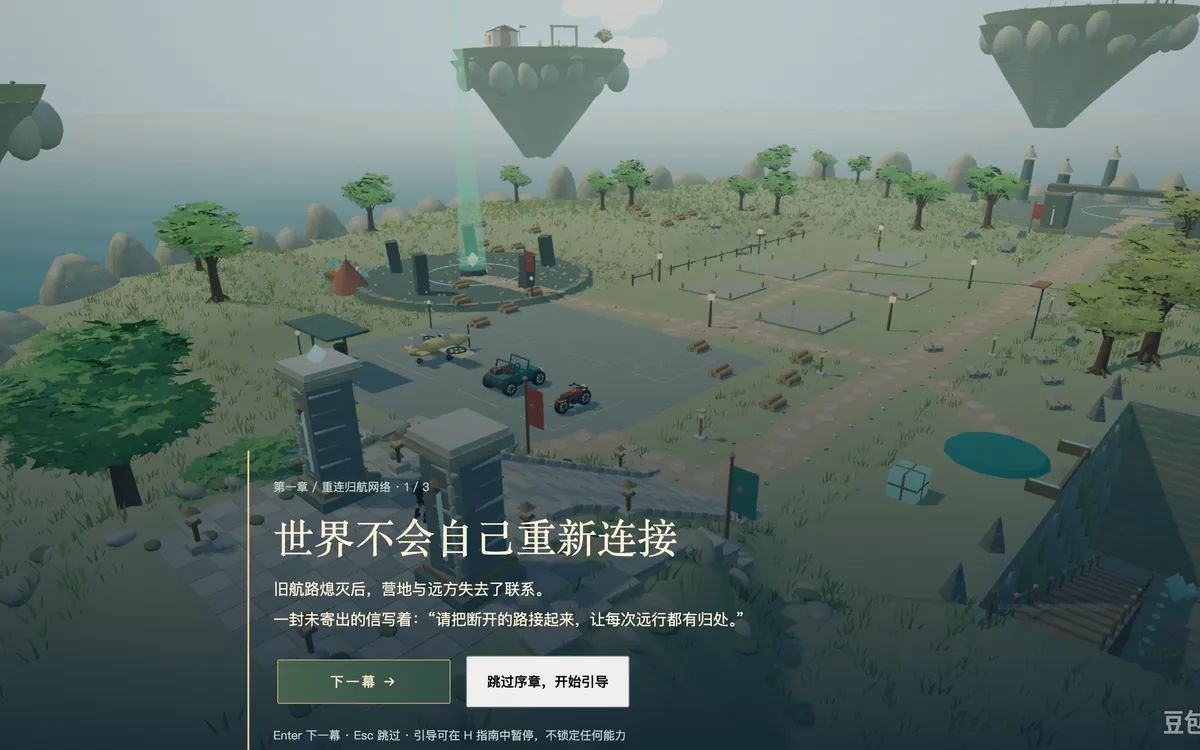
Agoro Road is a cozy road game about getting a caravan home without hurting anyone. Each stop is a small world beside a dirt road. In the build phase you place cloth stamps on rings beside the road and choose which way each one faces: a Waykeeper holds, a Lamplight reaches and reveals, an Echo Drum pushes and a Road Garden lures. Then the wave comes and dusk turns to night. Goats, a donkey and guinea fowl wander onto the road, and the stamps turn them back toward home. Nothing is harmed: there are no health bars and nothing is defeated. Dye earned in a wave buys the next stamps. The game is for anyone who would rather guide than fight.
The setting is Hearthland, a warm countryside with an African and diaspora cast: three travelers walk with the caravan, and a keeper who guides the animals home is coming next. Eight worlds form one journey, from First Light to The Crossroads, at four difficulty levels. It is a playable prototype, not a release, and runs three ways: a Storybook 2D view on the web; a 3D web view built with Three.js, switchable in Settings; and an Unreal Engine 5.8 playtest build on a Galaxy Tab S7+ Android tablet (not public), with touch controls, a two-finger camera twist, Battery, Balanced or Sharp graphics, and resolution set as a share of the device's own screen.
Agoro Road existed before the event: the 2D web game, its first two worlds and the three travelers were made earlier. New during the event: the 3D web view, the non-violent redesign, a new batch of Tripo models (caravan, stamps, animals, props and the keeper), the Unreal Engine 5.8 tablet version with touch controls, four new worlds and four difficulty levels, and the 2D/3D switch. The finale world, The Crossroads, and the multi-road rules of the new worlds came from two reference worlds the author generated in World Labs' Marble from the game's own seed frames: walking them suggested a caravan at a crossroads with animals coming from four roads. Marble served as art reference for the Unreal version and is not in the playable build.
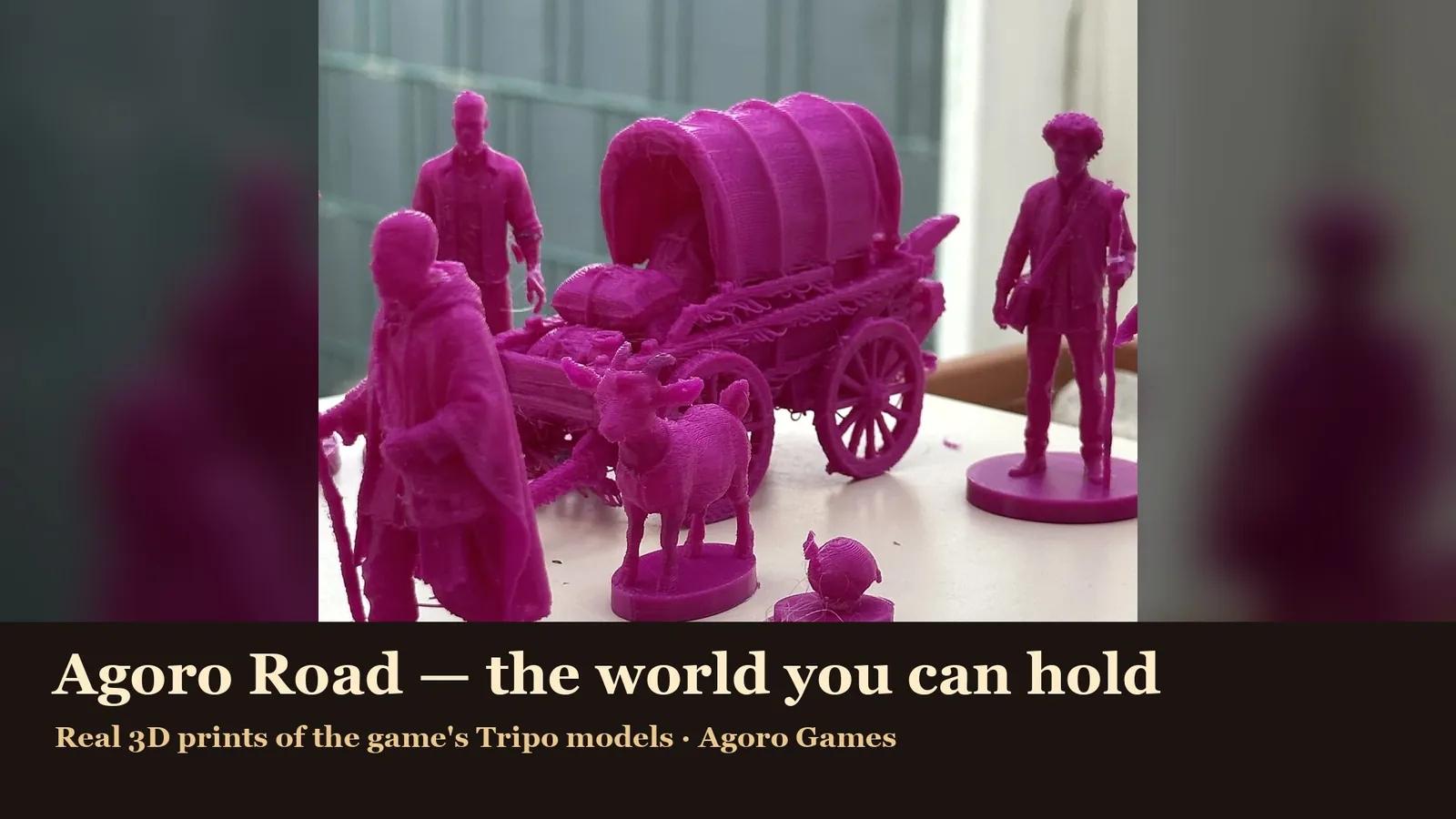
The same Tripo models have also been 3D-printed. The author printed them on their own FDM printer in one-color PLA: the covered caravan, the goat, the guinea fowl, the donkey, the drum stamp and the travelers. The print photos are real prints on the author's table, with only a gentle color grade (exposure, white balance, contrast); the magenta is the filament itself. These are prototype prints, single-color and unpainted, with visible layer lines and small print artifacts. The first figurines were printed from September 14 on, the group prints and all of the photos were made during the event, and the keeper, made on October 6, has not been printed yet. The author wants a child in West Africa, or anywhere, to be able to build their own playable world and then hold its characters in their hands: going from digital to physical is the step that makes a game world feel real and owned.
How Tripo was used
Every traveler, animal and object on the road is a Tripo model, and the same models were printed as figurines: one Tripo model, three places.
- Pipeline: a concept card, a Tripo image plate (identity, A-pose), image-to-3D, retopology, a Tripo rig (biped or quadruped), retargeted idle, walk and greet clips, then a small in-place fix in Blender; the donkey and guinea fowl were rigged locally in Blender.
- Travelers: the three travelers were made with Tripo P2.0 using Smart Mesh and Auto Rig.
- Caravan, stamps, animals and props: the caravan, the four stamps and six props came from the Tripo API as image-to-3D from the game's own concept plates, as did the goat, donkey, guinea fowl, eight world props and Kai.
- The keeper: made through the Tripo API on October 6 with a v3.1 model, retopology, a biped rig, a walk and guiding gestures; not printed yet.
- Images: Tripo's image model drew the concept cards for the animals and the keeper and repainted world plates from the game's road geometry.
- One model, three places: the same GLB files run in the Three.js web view, in the Unreal Engine 5.8 build on an Android tablet and on the 3D printer.