Author: Elian
 Try it live
About this project
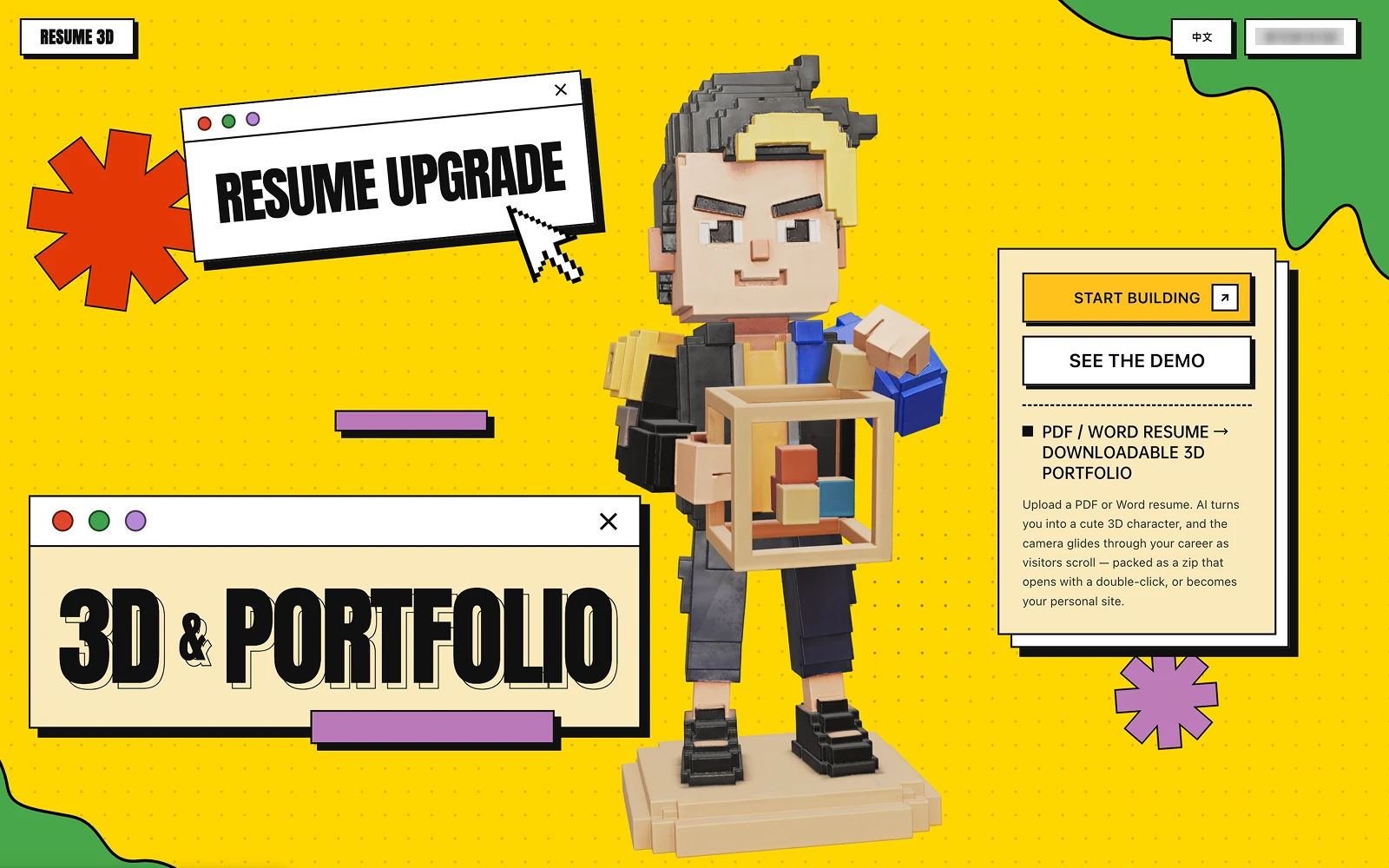
Resume3d changes the shape of sending out a resume: upload a PDF or Word file and AI reads identity, work history, education, skills and contact links, sorting them into a run of screens; the photo tucked inside the resume is pulled out and handed to Tripo image-to-model, which returns a cute 3D character in two or three minutes.
Once the details are confirmed and a color picked, all of it is arranged into a scroll-driven 3D homepage — the camera glides past experience, skills and a work gallery as visitors scroll. The result packs into a zip you take with you: a single web file that opens on a double-click, and a folder build ready to deploy as a personal site. Everything is billed to your own Tripo API Key, the resume is never stored, and drafts stay in your own browser.
Highlights
- Upload a PDF or Word resume (up to 10MB); identity, experience, education, skills and links are sorted into screens automatically — every field editable, every field optionally private
- The resume photo is extracted for you to choose from, or upload another; skip the photo entirely and pick one of seven ready-made characters at no credit cost
- The 3D character takes 2–3 minutes and about 80 credits, billed to your own Tripo API Key, with anything that fails to finish refunded automatically
- The exported zip carries two forms: a single portfolio.html that opens on a double-click and travels over chat or cloud drive, and a site/ folder you can push to GitHub Pages or Vercel as your personal site
Technical breakdown
Character generation · Tripo image-to-model on your own key
The site holds no Tripo credentials of its own: sign in to the Tripo developer platform, pick one of your own API Keys, and the credits land on that key’s account; the key lives only in the current tab and expires when the page closes. Once chosen, the photo pulled from the resume — or one you upload, or one of seven ready-made characters — goes into image-to-model and returns a textured 3D character in about 2–3 minutes, while the ready-made characters skip generation and cost nothing.
Resumable waits · polling, refunds and recovered drafts
The two waits are handled differently: closing or refreshing during resume parsing means uploading again, and the page says so plainly; 3D generation, by contrast, cannot be cancelled once started, and although it also asks you to keep the page open, a stray refresh still picks up where it left off — task state and finished intermediates live in browser storage, so returning resumes the run and even restores an unfinished draft from a previous visit. Failures do not swallow credits: Tripo refunds whatever did not complete, and you can retry or swap in a different photo.
Scroll journey · one model across every screen
The finished portfolio is a single Three.js r185 camera rail: an intro card up front, a run of content screens in the middle, a work gallery at the end, and a tick rail on the right marking where you are. The same GLB character is never reloaded between screens — a GSAP 3.15 timeline binds camera position, character pose and card entrances to scroll progress, so experience, skills and awards advance one screen at a time while the character moves continuously through them. The oversized background word, theme color and per-screen titles all come from editable fields and update the preview immediately.
Export and go · a two-form zip, all local
One zip ships two forms: a single portfolio.html packs the whole portfolio and its assets into one web file that opens on a double-click and survives being sent over chat or a cloud drive, at the cost of a larger file; the site/ folder is the smallest build, and pushing that directory to GitHub Pages or Vercel makes it a personal site. Up to eight jpg or png work images are compressed and bundled along the way, and the export panel estimates screen count and file size first. The resume itself is used only for that one generation and never written to disk, with drafts living solely in your own browser.